Summer School

Registrations for the Summer School coming soon!

EAA Summer School

The EAA Summer School will take place on Saturday 19 and Sunday 20 June 2027 at Ghent University. The Summer School precedes Acoustics ’27, which starts on Monday 21 June 2027.

Ghent is conveniently located 60 km from Brussels, directly accessible by train (35’, 4 trains/H) from Brussels Central Station and the Acoustics ’27 Forum Acusticum Venue. The city of Ghent offers plenty of affordable accommodation. The Summer School is chaired by Timothy Van Renterghem from the Institute for Biomedical Engineering (iBME)/Noise and Health, Department of Information Technology, Faculty of Engineering and Architecture at Ghent University.

Program

There will be 8 topical streams, each consisting of four one-hour lectures by well-recognized field experts. Each day, 4 streams will run in parallel. Each registered student must enroll in two streams, one held on Saturday and one held on Sunday.

Chair : Prof. Timothy Van Renterghem, Ghent University, Belgium

Prof. Timothy Van Renterghem

Timothy Van Renterghem is Full Professor at the Noise & Health group, part of the Institute of Biomedical Engineering (iBME) at the Department of Information Technology, Faculty of Engineering and Architecture, Ghent University. His main research expertise and interests are sound propagation outdoors and its numerical modelling, and the perception of environmental noise, including audio-visual interactions in relation to green infrastructure and how natural sounds influence outdoor soundscapes. He is Associate Editor of the journal of the European Acoustical Association "Acta Acustica" (for the theme : "Atmospheric sound") and Associate Editor for Elsevier's "Urban Forestry and Urban Greening". He teaches different courses related to noise pollution, acoustics, urban sound planning and instrumentation. He is author of the book "Predicting outdoor sound (second edition) (ISBN 9781498740074) that has become a reference work in this field.

Virtual acoustics and auralization
Theme responsible: Dr. Reto Pieren , EMPA, Switzerland
Acoustical signal processing
Theme responsible: Prof. Vesa Välimäki , Aalto University, Finland
AI in acoustics
Theme responsible: Prof. Tuomas Virtanen , Tampere University, Finland
Soundscapes and sound perception
Theme responsible: Dr. Arezoo Talebzadeh , Ghent University, Belgium Dr. Kirsten van den Bosch , University of Groningen, The Netherlands
Emerging environmental noise sources: drones/UAV, heat pumps, electrical vehicles
Theme responsible: Prof. Antonio J. Torija Martínez , Salford, UK
Musical acoustics
Theme responsible: Dr. Vasilis Chatziioannou , University of Music and Performing Arts Vienna, Austria
Hearing technology
Theme responsible: Prof. Sarah Verhulst , Ghent University, Belgium
Acoustic (meta)materials
Theme responsible: Prof. Elke Deckers , KU Leuven, Belgium

Summary

Soon available

Summary

Soon available

Summary

Soon available

Summary

Soon available

Summary

Acoustic Signal Processing is a summer course surveying modern analysis, representation, and generation of sounds. We begin with spectral analysis using FFT, proceed to the Short-Time Fourier Transform (STFT), and touch on perceptual frequency scales and constant-Q methods. Practical examples include spectral analysis of musical and natural sounds and a demonstration of denoising using a two-stage U-Net based on a spectrogram input.

Summary

The second module covers three-way spectral decomposition based on median filtering of a spectrogram, which allows creative applications such as remixing and time-scale modification, with a live demo of an app called SiTraNo.

Summary

The third module discusses audio embeddings, such as neural audio codecs, self-supervised and contrastive learning methods for training application-agnostic representations that transfer across tasks.

Summary

The final module covers audio generation using earlier analysis techniques, such as diffusion and autoregressive models, conditional generation such as text-to-audio synthesis, and inverse problems, including audio restoration and enhancement.

Summary

This lecture provides an introduction to AI and machine learning methods for acoustic signal analysis. We begin by introducing the basic supervised learning framework and discussing the characteristics of training data required for good model performance. We then examine how machine learning problems are formulated for different acoustic scene analysis tasks, including audio classification, sound event detection, and source localization, while also briefly covering more advanced topics such as audio captioning. We then introduce common low-level audio representations and deep neural network architectures used to solve these problems, as well as training objectives and algorithms. Finally, we present openly available resources in the field, including datasets and pre-trained machine learning models.

Summary

This lecture provides an introduction to AI and machine learning methods for audio signal processing. We begin by discussing audio processing tasks where machine learning has become an effective approach, including sound source separation, speech enhancement, dereverberation, and audio generation. We then examine how these tasks can be formulated within the supervised learning framework. Next, we introduce deep neural network architectures commonly used for audio processing, highlighting their differences from architectures typically employed for audio analysis. The talk also covers training objectives and specialized training techniques required to address ambiguities inherent in some audio processing tasks, such as permutation-invariant training. Finally, we present openly available resources in the field, including datasets and pre-trained machine learning models.

Summary

Spatial audio is an important component of immersive technologies, human-machine interaction, and intelligent acoustic sensing. Recent advances in artificial intelligence and deep learning are opening new possibilities for processing, interpreting, and reproducing complex acoustic scenes. This lecture intends to explore the interplay between signal processing, acoustical modeling, and machine learning, and to highlight both the opportunities and challenges of bringing AI into spatial audio. We will first introduce the fundamentals of microphone array processing, acoustic propagation models, and spatial cues arising from multichannel recordings, establishing the foundations for spatial audio analysis. We will then examine learning-based approaches to multichannel speech and audio enhancement, deep-learning methods for sound source localization and acoustic imaging, and data-driven techniques for sound event localization and detection (SELD), combining semantic recognition with spatial and temporal characterization of sound events. Finally, we will mention emerging approaches to deep acoustic scene analysis, illustrating how AI can move beyond detecting individual sources towards a more comprehensive understanding of complex acoustic environments.

Summary

Soon available

Summary

Soundscape studies shift the focus from noise as a quantity to be reduced to the acoustic environment as people perceive, experience, and understand it in context. This lecture introduces the core concepts and methods of the field as framed by the ISO 12913 series: what a soundscape is, how soundscape data are collected, and the two-dimensional model of perceived affective quality, pleasantness and eventfulness that underpins much current research. We will trace how the field has moved from outdoor urban environments to indoor spaces, and from describing soundscapes to designing them. Throughout, we ask whose perception we measure, and how age, hearing, and cognition shape how different listeners, from children to older adults, experience the same environment.

Summary

Sound is an integral part of children’s everyday learning environments, but how does it affect their ability to concentrate, learn, and interact with others? And how do children themselves experience the sounds around them? This lecture explores the role of sound and music in educational settings, looking at how different acoustic environments can support or hinder learning. It introduces key findings from research on the effects of sound on learning, alongside work on soundscapes in schools and other spaces where children spend time. A particular focus is on how children perceive and evaluate their acoustic environments, and on the methods used to include their perspectives in soundscape research. By bringing together insights from acoustics, soundscape studies, and education, the lecture will consider how a better understanding of children’s auditory experiences can inform the design of learning environments that are both acoustically suitable and responsive to their needs.

Summary

Music can be a vehicle to test both sound perception and higher-order cognitive processes that make meaning of that sound. This lecture will cover peripheral and central auditory processing, and listening with a hearing device such as a cochlear implant, which compensates for inner-ear damage by sending electrical pulses to the auditory nerve. We will discuss how cues at different frequencies can signal emotional content in music, and what happens to those cues when they are altered due to hearing loss. Special focus will be given to technical aspects of listening to music with a cochlear implant, including how signal processing can help to create cochlear implant simulations for perception research. Depending on the number of attendees, a lab will include more about either sound limitations of a cochlear implant (smaller groups) or how exciting music can elicit physiological responses (larger groups).

Summary

Soundscape perception depends on more than hearing: the brain must separate a mixture of sounds into meaningful sources and work out what each one means. This lecture introduces auditory scene analysis, the processes by which listeners segregate and group sounds into perceptual streams, and examines what happens when these processes change with cognitive decline. Using dementia as a case study, we will discuss how different subtypes affect distinct stages of auditory processing, from separating speech from background noise to recognizing sounds and responding to them emotionally. As a result, the same acoustic environment can support one listener while confusing or distressing another. The lecture then translates this perceptual science into soundscape design principles drawn from research in care environments: reducing competing sources, making key sounds identifiable and predictable, and using sound to support orientation and engagement. A listening exercise will let participants experience how scene complexity shapes perception.

Summary

The rapid expansion of drone operations is driving the need for robust approaches to quantify and assess their acoustic impact. This lecture reviews state-of-the-art methods for drone noise measurement and source characterisation, including laboratory and field-based techniques. Advances in drone noise modelling are discussed, highlighting current capabilities, key challenges, and limitations in predicting noise from increasingly complex operations. The lecture also examines approaches for drone noise assessment, with particular emphasis on psychoacoustic and perceptual methods that support the development of noise metrics, regulation, and quieter, more socially acceptable drone technologies.

Summary

Transport noise, particularly aircraft noise, can elicit a wide range of psychological and physiological responses in humans, spanning from acute reactions to long-term health effects. Immediate responses include a feeling of unpleasantness or disturbance, transient increases in heart rate, and nocturnal awakenings. Repeated exposure to noise events may lead to chronic annoyance and, over time, elevated risks for mental health disorders and cardiovascular diseases. While extensive evidence exists regarding the health impacts of conventional aviation noise, emerging technologies such as urban drones are increasingly entering the market. This raises critical questions: To what extent can existing exposure-response models derived from conventional aviation be applied to these novel noise sources? This lecture provides an overview of the biological and psychological pathways underlying noise-induced stress responses, as well as their acoustic and non-acoustic influence factors. A comparative analysis of conventional and emerging aviation noise sources is presented.

Summary

As heat pumps become increasingly important for sustainable heating and cooling, their acoustic performance presents growing challenges. This lecture explores key aspects of heat pump noise, focusing on measurement techniques, acoustic modelling, and effective noise reduction strategies. Particular attention is given to dominant noise sources, operating conditions, heat pump placement and sound propagation. Current challenges and recent advances are discussed, highlighting practical approaches to improving acoustic performance while maintaining energy efficiency and user acceptance.

Summary

Electric cars, micromobility vehicles, and autonomous service robots increasingly share space with pedestrians, yet they are often too quiet to be noticed. Acoustic Vehicle Alerting Systems (AVAS) address this by adding artificial warning sounds, but how these sounds should be designed is far from trivial. This lecture introduces the motivation behind AVAS and gives an overview of their applications, from regulated systems in electric cars to the still largely unregulated fields of micromobility and robotics, and of the requirements that shape their sound design. A central part of the lecture concerns human perception: how alerting sounds are detected, localized and judged by listeners, and how these aspects can be evaluated. Finally, open questions are discussed, such as the community noise impact of alerting sounds and how to balance safety, annoyance and acceptance across very different kinds of machines.

Summary

Soon available

Summary

Soon available

Summary

Soon available

Summary

Soon available

Summary

Soon available

Summary

This lecture will give an overview on the numerical modelling of periodic structures, starting from a finite element model of its unit cell and focusing on vibro-acoustic analysis. Dispersion curves are discussed in detail, accompanied by a didactical matlab scripts. A short overview on Sound Transmission loss calculations, how to account for finite structure and how to speed up simulations will be briefly discussed. As an application, vibro-acoustic metamaterials are envisioned.

Summary

This lecture will cover a selected range industrially relevant application cases of vibro-acoustic metamaterials. The different cases will be covered starting from vibro-acoustic characterization, over application of metamaterial design tools up to experimental validations.

Summary

The scattering matrix of a system that perfectly absorbs the acoustic energy has properties that can be used effectively to design complex structures. These properties are first examined and analyzed. Examples of systems that provide perfect absorption when bounded by a rigid backing, by an impedance boundary condition (baffled duct), or unbounded (transmission problem) are then presented. Finally, the conditions for their optimal design are provided and illustrated with examples.

Summary

Reducing noise transmission through ventilated ducts while adding minimal pressure drop is a key challenge for applications where energy efficiency matters. Conventional solutions often rely on porous quarter-wavelength resonators, whose low-frequency acoustic efficiency comes at the cost of a higher pressure drop. This lecture presents the design principles of Helmholtz-resonator-based alternatives and illustrates them with two industrial cases: Sil’FLOW 172, an acoustic trickle vent, and Sil’PAC, an acoustic enclosure for heat pumps. Acoustic performance is discussed against pressure drop, from simulation to measurement.

Biography soon available

Biography soon available

Biography soon available

Biography soon available

Vesa Välimäki is Full Professor of Audio Signal Processing and Vice Dean for Research in Electrical Engineering at Aalto University, Espoo, Finland. He received the D.Sc. degree from Helsinki University of Technology in 1995. His career includes positions at Tampere University of Technology, University of Westminster, and Stanford University's CCRMA. His research focuses on audio and music signal processing and machine learning. He is a Fellow of the IEEE, the Audio Engineering Society, and the International Academy of Artificial Intelligence Sciences (AAIS). He has held major editorial roles in journals, including Editor-in-Chief of the Journal of the Audio Engineering Society.

Eloi Moliner received the B.Sc. and M.Sc. degrees from the Polytechnic University of Catalonia, Barcelona, Spain, in 2018 and 2021. He completed his Ph.D. at the Acoustics Lab of Aalto University, Espoo, Finland, in 2025, and is now a postdoctoral researcher there. His research spans audio and acoustic signal processing, with a focus on applying generative modeling to audio restoration and other applications. He has worked as a research intern at Microsoft Research, Sony AI, and Meta Reality Labs. He has received the Best Student Paper Award at IEEE ICASSP 2023, IWAENC 2024, and AES AIMLA 2025.

Tuomas Virtanen is Professor at Tampere University, Finland, where he is leading the Audio Research Group. He received the M.Sc. and Doctor of Science degrees in information technology from Tampere University of Technology in 2001 and 2006, respectively. He has also been working as a research associate at Cambridge University Engineering Department, UK. He is known for his pioneering work on computational acoustic scene analysis and sound source separation. His research interests include machine listening, computational content analysis of audio, and machine learning for audio. He has authored more than 200 scientific publications on the above topics, which have been cited more than 20000 times. He has received IEEE Signal Processing Society best paper awards multiple times, as well as many other best paper awards. He is an IEEE Fellow, IEEE Signal Processing Society Distinguished Lecturer 2024-2025, recipient of the ERC 2014 Starting Grant, and has been a member of the Audio and Acoustic Signal Processing Technical Committee of IEEE Signal Processing Society.

Archontis Politis is an assistant professor at Tampere University, Finland. He obtained his M.Sc. degree in Sound & Vibration studies from the Institute of Sound and Vibration Research (ISVR), University of Southampton, UK, in 2008. From 2008-2009 he was a researcher in a joint collaboration between the Glasgow school of Arts and Arup Acoustics in Glasgow, UK, performing research on virtual acoustics and architectural auralization. From 2010-2016 he was a doctoral researcher in Aalto University, Finland, from which he obtained his Doctor of Science degree on spatial audio processing of real scenes. He has been a visiting researcher at the University of Maryland Institute for Advanced Computer Studies, MA, USA, and a research intern at Microsoft Research, Redmond, WA, USA. Additionally, he has served as editor and contributing author of a book on Parametric Spatial Audio Processing, as organizer in the DCASE scientific challenge, and has chaired various special sessions in international conferences. His research interests include spatial audio technologies, array signal processing, and acoustic scene analysis.

Kirsten van den Bosch is an Assistant Professor in the Department of Pedagogical and Educational Sciences at the University of Groningen. Her research focuses on soundscape perception and the relationship between people and their surroundings, with a particular interest in the concept of audible safety. She has studied the psychological effects of sound on emotions, behavior, and well-being in contexts ranging from healthcare to education and music festivals. Furthermore, she contributed to international soundscape standards, co-chairs Women+ at EAA, and is associate editor of the Journal of Sonic Studies.

Currently a postdoc in the Bilingualism and Aging Lab, University of Groningen (NL), Ellie’s current project investigates how choir and sign language activities may benefit cognitive aging and social wellbeing in older adults with hearing loss. Her other research lines include: music and speech perception with hearing loss, especially with cochlear implants; Neural Resonance Theory; working-memory-related brain oscillatory contributions to speech-in-noise perception. Ellie is also a member of the Speech Perception Lab of Deniz Başkent at the University Medical Center Groningen, trained once upon a time in opera singing and leads a small church choir a few times a year.

Arezoo Talebzadeh is a Professor of Practice at McGill University and a practicing architect in Toronto, Canada. She holds a PhD from Ghent University, where she researched soundscape augmentation for people living with dementia, including a randomized controlled trial with the Toronto Rehabilitation Institute (UHN). Her work connects auditory perception and architectural design, focusing on inclusive indoor soundscapes for listeners with diverse perceptual and cognitive needs. She is affiliated with AIRS, teaches graduate courses, and, as an Adjunct Professor, supervises students in Inclusive Design at OCAD University. Arezoo also founded Navā40 Lab, which develops sound-based interventions to support care environments; she co-chairs Women+ at EAA and has organized sessions on soundscape and inclusion at Forum Acusticum.

Prof. Antonio J. Torija Martinez is a world-leading expert in environmental acoustics and a pioneer of Perception-Driven Engineering, placing human noise perception at the centre of design for sustainable mobility and decarbonisation. He has led major EU, UKRI, and industry-funded projects following a prestigious Marie Skłodowska-Curie Fellowship, and has received multiple awards for excellence in acoustics. His research has informed policy and practice internationally, including providing evidence to the UK House of Lords on noise and health. He chairs the Quiet Drones international conference series, contributes to key international groups on aircraft and UAS noise (NASA, NATO, ISO), and is recognised as one of the world's leading researchers in drone acoustics.

Susanne Bartels is a research associate at the Institute of Aerospace Medicine, German Aerospace Center (DLR), Cologne, where she leads the team Noise Impact Research. With a background in psychology, her work focuses on the health effects of noise from various transportation sources on both the general population and vulnerable groups. Her particular research interests include noise-induced sleep disturbance, annoyance, and the underlying psychological and physiological mechanisms.

Dr. Reichl is a senior scientist at AIT with over 25 years of experience in fluid mechanics, aeroacoustics, and heat pump acoustics. He lectures at TU Wien in Applied Fluid Mechanics and leads international IEA research projects on heat pump acoustics. He is an active member of international scientific committees and President of the Austrian Physical Society.

Leon Müller is a researcher in applied acoustics who received his PhD from Chalmers University of Technology, Gothenburg, Sweden. His work combines source and traffic noise modelling, auralization, and listening experiments to study how people perceive and respond to sounds in virtual acoustic environments. Main applications have been the perception of electric vehicle sounds and acoustic vehicle alerting systems (AVAS), as well as the human response to road traffic noise in living environments. His current work extends this to alerting sounds for heavy electric vehicles and autonomous service robots.

Biography soon available

Claus Claeys is a researcher manager at the department of mechanical engineering of KU Leuven. His research focuses on the design, modelling, and experimental validation of locally resonant metamaterials and other advanced structures for vibration and noise control. His interests span structural dynamics, vibro-acoustics, and dynamic testing, with particular attention to translating novel concepts into relevant industrial applications.

Biography soon available

Biography soon available

Elke Deckers is an associate professor at the department of Mechanical Engineering of KU Leuven. Her research focuses on the design and analysis of lightweight material systems, including viscous materials, metamaterials and meta-porous systems, and the development of supporting fast numerical prediction techniques. She also focuses on the manufacturing of such structures by polymer processing techniques like injection moulding and thermoforming. This enables her to focus on closing and exploiting the full (digital) loop ranging from design, over manufacturing to actual product performance.

Claus Claeys is a researcher manager at the department of mechanical engineering of KU Leuven. His research focuses on the design, modelling, and experimental validation of locally resonant metamaterials and other advanced structures for vibration and noise control. His interests span structural dynamics, vibro-acoustics, and dynamic testing, with particular attention to translating novel concepts into relevant industrial applications.

Jean-Philippe Groby currently holds a research Professor position at the Laboratoire d’Acoustique de l’Université du Mans (UMR CNRS 6613). His research in physical acoustics focuses on the design, manufacturing, and characterization of complex structures for the control of audible sound, such as metamaterials, meta-surfaces and metafluids, as well as porous and poroelastic materials.

Jean Boulvert is the founder and CTO of SIL&ADD, an acoustic engineering company based in Le Mans, France. He holds a PhD in acoustics from the Laboratoire d’Acoustique de l’Université du Mans (UMR CNRS 6613), on the design of optimal 3D-printed porous sound absorbers. His work now focuses on the design and optimization of acoustic materials and products for industrial applications.

Preliminary schedule:

Friday evening 18/06/2027 (18.30-20.00): Informal meet and greet in the city Centre of Gent.

Saturday 19/06/2027, iGent, Technologiepark-Zwijnaarde: Streams 1-4
09.15 – 09.45 Registration
09.45 – 10.00 Introduction to the streams
10.00 – 11.00 Lecture 1
11.00 – 11.30 Coffee Break
11.30 – 12.30 Lecture 2
12.30 – 14.00 Lunch
14.00 – 15.00 Lecture 3
15.00 – 15.30 Coffee Break
15.30 – 16.30 Lecture 4

Sunday 20/06/2027, iGent, Technologiepark-Zwijnaarde : Streams 5-8
09.45 – 10.00 Introduction to the streams
10.00 – 11.00 Lecture 1
11.00 – 11.30 Coffee Break
11.30 – 12.30 Lecture 2
12.30 – 14.00 Lunch
14.00 – 15.00 Lecture 3
15.00 – 15.30 Coffee Break
15.30 – 16.30 Lecture 4
Registration

Registration is not yet open. In total, 120 participants will be allowed to attend the Summer School on a first-come, first-served basis. The target audience is (PhD) students in acoustics and early-career researchers.

About Ghent University

Founded in 1817, Ghent University is a top 100 university and one of Belgium’s leading academic institutions, with more than 50,000 students and 15,000 staff members. Its 11 faculties offer over 200 programs and conduct pioneering research across a broad range of scientific disciplines.

Guided by the motto “Dare to Think”, Ghent University encourages critical thinking, innovation, and open dialogue. As a pluralistic university, it welcomes students and researchers from all cultural, social, and ideological backgrounds.

The City of Ghent

Ghent is a vibrant historic city where rich cultural heritage meets contemporary urban life. Known for its lively atmosphere, picturesque canals, excellent gastronomy, and welcoming character, Ghent offers visitors a unique and memorable experience. Participants are encouraged to explore the city’s architectural treasures and cultural highlights, including the world-famous masterpiece The Adoration of the Mystic Lamb by the Van Eyck brothers.

Summer School Venue

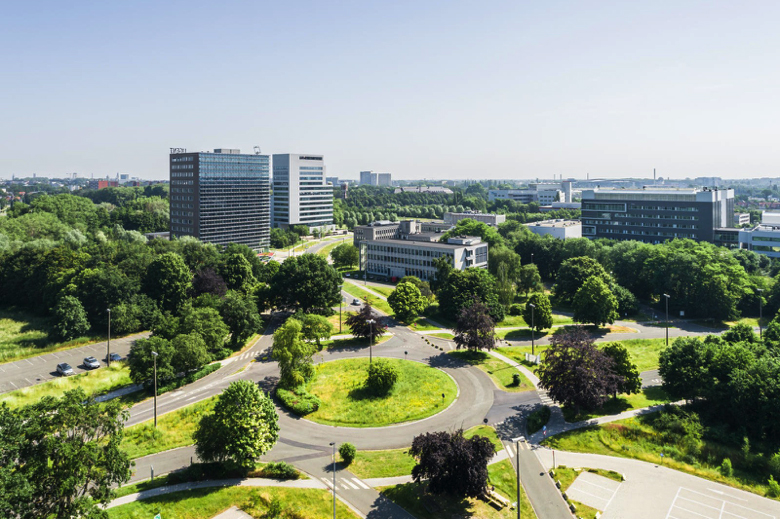
The Summer School will be hosted at Tech Lane Ghent Science Park, a dynamic innovation hub bringing together international R&D centres, public research institutes, and high-tech companies. The venue is located approximately 5 km from the city centre and is easily accessible by public transport. Sessions will take place in the iGent Tower building.